
The Risks of Working in Poorly Ventilated Spaces
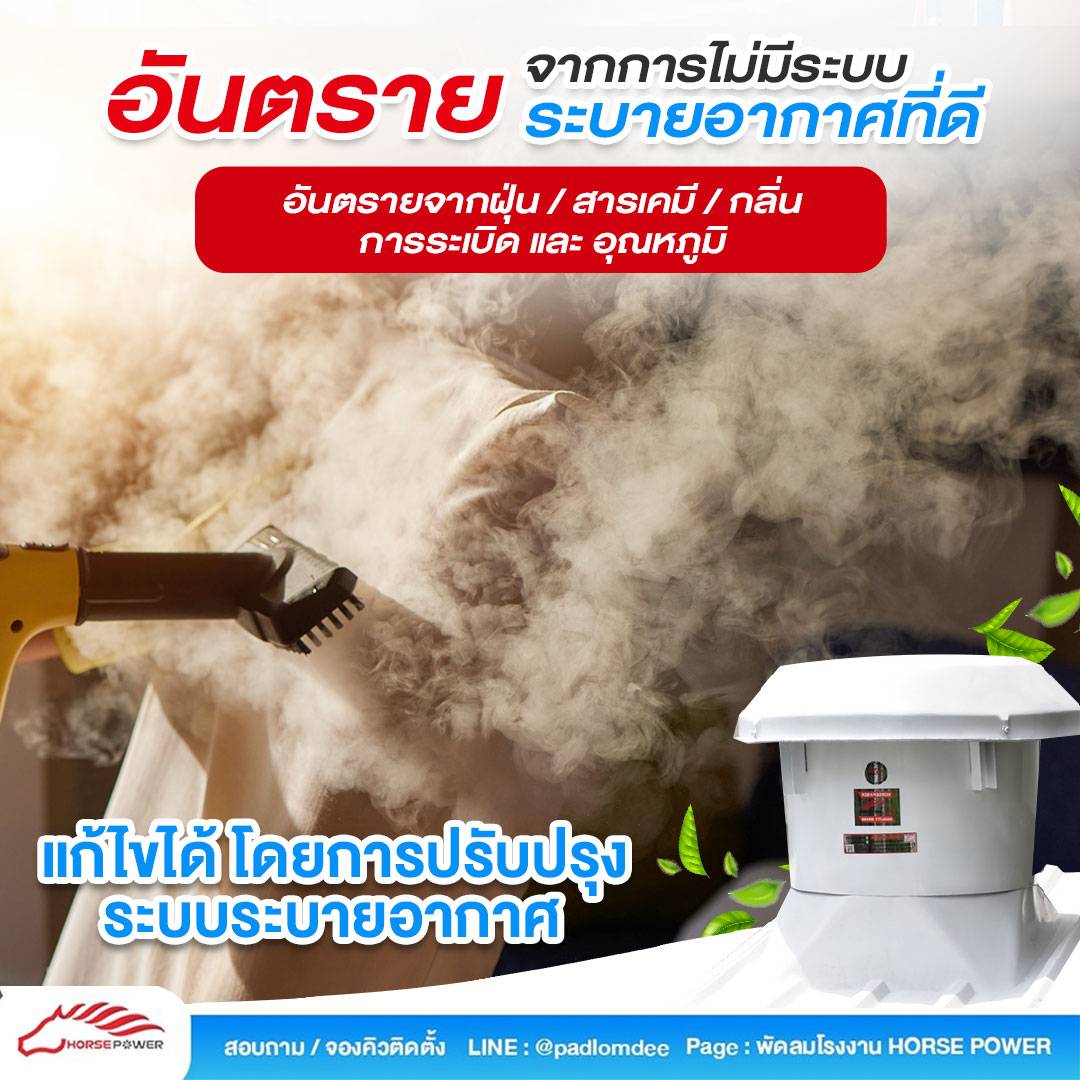
The Dangers of Inadequate Ventilation
Some hazards are invisible. How can we prevent or avoid them?
Ventilation needs in homes, commercial buildings, high-rises, and condominiums differ considerably from those in factories. Industrial facilities may contain many chemicals and pollutants, as well as large numbers of workers. Fuel combustion, machinery operation, and production processes can generate heat, chemicals, gases, and hazardous particles. These conditions directly affect people working inside the facility, and inadequate ventilation can have more serious consequences than expected.
In this article, the PADLOMDEE team explains the risks of working in poorly ventilated spaces and approaches to prevention. First, we look at what a ventilation system does and how it works.
What Is a Ventilation System?
A ventilation system exchanges air between the inside and outside of a building. In simple terms, it removes contaminated or stale indoor air and replaces it with better-quality incoming air. This can help maintain a suitable indoor temperature, reduce unpleasant odors, and remove airborne chemical contaminants from the building.
Ventilation is usually considered during building design. Problems can arise when the original system is inadequate or when the building is used differently from the conditions assumed in the design calculations. Buildings, warehouses, and factories with poor air exchange may expose occupants to the risks of inadequate ventilation.
Common causes include more occupants or workers than originally planned, machinery that generates substantial heat, or processes using chemicals that produce pollutants. These issues can be addressed by improving the existing ventilation system or installing additional capacity to meet actual operating requirements.
Risks Associated with Poor Ventilation
-
Dust exposure: Everyday activity and industrial work generate airborne particles in buildings, warehouses, and factories. PM2.5 and tobacco smoke are examples of pollutants that can cause cumulative harm over time.
-
Chemical exposure: Factories and production facilities often use machinery and chemicals during processing. Without adequate ventilation, airborne chemicals may accumulate and be inhaled. Depending on the substances and exposure, this can contribute to respiratory problems, including lung cancer or allergies.
-
Unpleasant odors: Living or working in poorly ventilated spaces can have a greater impact on well-being than expected. Persistent unpleasant smells or chemical odors make the working environment uncomfortable.
-
Fire and explosion hazards: Where flammable chemicals are used, high concentrations of airborne vapors can become dangerous. Even a small spark may trigger a fire or, in severe cases, an explosion.
Heat exposure: In Thailand’s hot climate, ineffective or inadequate ventilation can make indoor temperatures much higher than those outdoors. Excessive heat buildup affects both workers and operating machinery. Adequate ventilation can help support more efficient and consistent operation.
Preventing the Risks of Poor Ventilation
If your building already has a ventilation system, inspect it regularly and carry out the necessary maintenance. For a new system or additional ventilation, contact PADLOMDEE. We provide complete ventilation design, manufacturing, and installation services, including exhaust fans, industrial fans, and roof exhaust fans.